Study Abroad: Japan 2026
The University of New Mexico, through the Honors College, presents the Arts and Culture of Japan, an intensive study abroad program of the arts and culture of Japan. The program offers students 6 semester hours of credit through the enrollment in two courses. Starting in a second 8-week course in the spring 2026 semester, students will meet once a week (for a one-hour and 15-minute session). Expeditionary fieldwork will take place in and around Kyoto, Japan from May 18-31.
Sign-up to receive up-to-date information about Japan Study Abroad Program for Spring 2026!
Program Philosophy
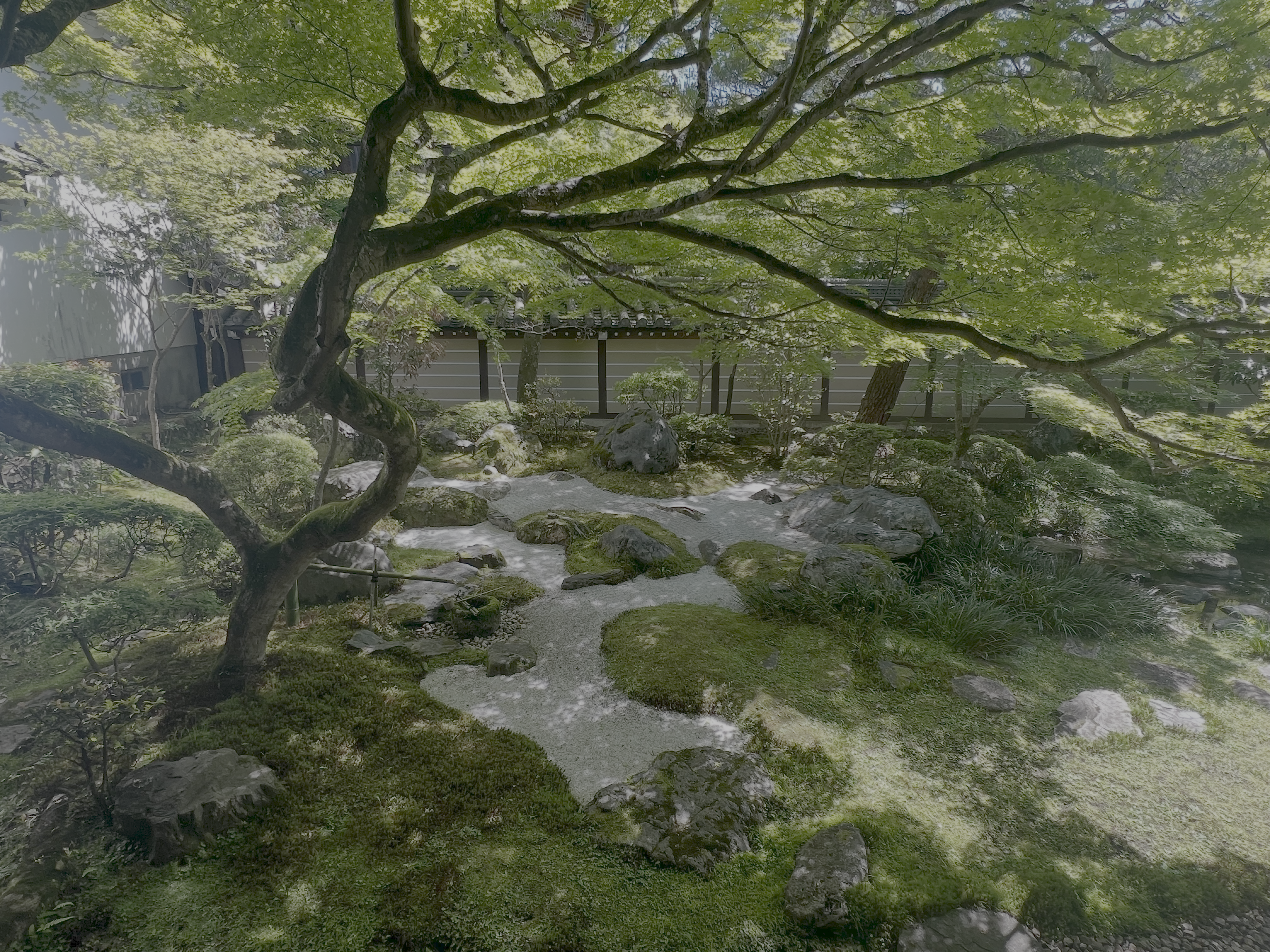
The program will introduce students to the arts and culture of Japan with an eye on investigating Japanese aesthetics, ecological philosophies, arts and crafts, and religious practices that explore humans’ relationship and interconnection with the natural world. The program will be based in Kyoto and include day trips to the outskirts of Kyoto and Nara, Japan's ancient capital in the 8th century. Students will interact with locals, engage with scholars, visit sacred sites and museums, and participate in art-making workshops.
The two courses in the program will use an interdisciplinary framework to explore Japanese arts and crafts at the intersection of Japanese aesthetics, ecological philosophies, and religious practices, which ultimately explore humans’ relationship and interconnection with the natural world as well as how to navigate a new culture. We will meet during the second 8 weeks of the spring 2026 semester to do preliminary readings in advance of our program departure to provide a framework of Japanese aesthetic sensibilities, philosophies, and perspectives.
Adopting the methodology of reading place as a text, students will immerse themselves in direct observation, meticulous documentation, and comprehensive mapping exercises. Through reflective writing tasks, interviews, and interactive discussions, learners will distill their insights and observations. Using these tools, students will apply humanistic inquiry across disciplines to develop their distinctive creative projects. By weaving together diverse learning modalities via experiential strategies, the course encourages students to hone their communication, critical thinking, and creative faculties, while deepening their socio-cultural understanding and appreciation of the cultural and artistic epicenter that is Kyoto.
SPRING 2026 IMPORTANT TRAVEL DATES
2nd 8-Week course meets once a week starting on: March 24 from 5-6:15 pm Travel to Japan: Monday, May 18, 2026
Field Study in Kyoto: May 19- May 30, 2026 (plan to be in Kyoto by May 19)
Travel Back to New Mexico: Sunday, May 31, or stay later and travel back independently
HOW TO APPLY
Applying to the Japan Study Abroad Program is easy!
STEP 1: Attend one of the following informational meetings or schedule a one-on-one meeting:
- Wednesday, August 27 @ 2-3 pm in the Honors College Forum
- Friday, Sept. 12 @ 10-11 am in the Honors College Forum
- Monday, Oct. 6 @ 10-11 am Virtual
All aspects of the program will be reviewed during these informational sessions. If you are unable to attend, email Professor Jacobs and express your interest. Slides from our information session can be viewed here.
STEP 2: APPLY
STEP 3: INTERVIEW
Candidates will be interviewed for the program. Interviews will take place on October 27, 29, and 31.
STEP 4: INVITATIONS
Thirteen students will be selected to attend the Japan Study Abroad Program in spring 2026. Invitations to take part in the program will be sent via email during the first week of November.
STEP 5: SPRING 8-WEEK COURSE
Students will need to register for the two courses: UHON 301: 008 Japan: Arts & Culture (3 credits), the spring 8-week course, and UHON 301:011 Japan: Exploration & Research (3 credits), an in-country travel course.
STEP 6: ATTEND GROUP ORIENTATION
Friday, December 5, from 4:30-7 pm in the HC forum
Final Project Proposal + Group Oral Presentations
Japan Packing ListCanvas app
Google Maps (share Kyoto map via WhatsApp)
Google Translate or Apple Translate
CISI app
Microsoft Authentication (MFA) app
Uber app
Go Taxi app for Japan
Airline apps for any flights you will be on (they will rebook you quicker than standing in line!) i.e. American Airlines and/or Japan Airlines
Ubigi for data (eSIM) or Mobi Matters (eSIM)

Order and read: Basho text: Matsuo Basho, Travel Writings. Translated Stephen Carter, Hackett, 2020. ISBN-10 : 1624668577
- Watch films:
- Begin research for Final Project Proposal + Group Oral Presentations
- Apply for a passport
- Jan 15: pay Maketplace Program Fee ($850)
- Jan 15: Apply via GEO for our program Arts & Culture of Japan (they will collect emergency contact information, CISI insurance and more)
STEP 7: APPLY FOR SCHOLARSHIPS
Study abroad is a transformative experience for students, and the honors college aims to support as many students as possible in traveling abroad. Here are resources to help students secure scholarships for study abroad opportunities:
- Attend a GEO session and earn support
- GEO Passport Grant. This grant will cover the cost of applying for a passport for the first time. It is open to Pell-eligible students.
Undergraduate Study Abroad Scholarshipapplications are now open for the summer semester (which is how GEO categorizes our program).
Study Abroad Application Fee Grant is now open. This grant is open to those who are Pell-eligible and will cover the cost of the application fee.
National Scholarships
- Benjamin A. Gilman Scholarship, for Pell-eligible students, up to $5,000. There is a call in the fall and the spring for this scholarship.
The Honors College is committed to supporting our students whenever possible. However, by federal and state law, a student's financial aid cannot exceed that student's annual "cost of attendance," as determined by FAFSA. The "cost of attendance" includes financial aid funds such as grants, scholarships, loans, and work study. If you are already receiving significant financial aid, money received for study abroad, conference travel expenses, or a scholarship may push your aid above the allowed amount.
The Honors College cannot change that amount for you. If you are receiving financial aid and are applying for a scholarship for study abroad or conference travel, please schedule a meeting with a financial aid counselor to discuss whether your "cost of attendance" may need to be increased. The Office of Financial Aid has appointments available every morning, and walk-in hours every afternoon.
STEP 8: PAY UNM MARKETPLACE PROGRAM FEE
The 2026 Arts and Culture of Japan Study Abroad program fee is $850 and must be paid by January 15, 2026, via UNM Marketplace. The program fee supports lodging costs and is non-refundable.
STEP 9: APPLY FOR THE PROGRAM VIA UNM GLOBAL EDUATION OFFICE (GEO)
Students accepted into the Japan Arts and Culture Study Abroad Program will need to register with the Global Education Office and officially apply and complete their procedures for providing the necessary documentation (copies of passports, health insurance, etc) by January 15. Apply for CISI insurance for the full program dates of May 18-31, a step that will be included in the application. Included in the process, students should complete the required GEO Student Pre-Departure Orientation.
Tickets/Airfare
Students travel to Japan at their own expense. The Japan study abroad program encourages students to find their own best airfare rates. We will provide recommendations, but students are responsible for making their own travel arrangements. We will also try to facilitate students traveling together. In order to ensure that you have made your reservation in a timely way, we will require that you provide a copy of your ticket or e-ticket by the date in the spring that will be communicated to you. Here are the faculty flights to Japan if you would like to take the same one.
Room and Board
The program fee supports lodging costs and is non-refundable. A payment link will be shared with the class by mid-December.
A passport book is required for traveling to Japan. Applicants who are U.S. citizens do not need a visa if staying in Japan for less than 90 days. We encourage students to use the on-campus Passport Office. For other ways to apply for a passport visit the U.S. Department of State's website. The Study Abroad office offers a GEO passport scholarship which supports the cost of students obtaining a passport. See if you are eligible here.
All students are required to have accident and medical insurance coverage for the duration of the program.
COURSEWORK
Students enrolled in this program will enroll in two, three-credit Honors College seminars (UHON 301:008 Arts & Culture of Japan and UHON 301:011 Japan: Exploration & Research) during the spring 2026 semester. The Arts & Culture of Japan course will meet once a week (for a one-hour and 15-minute session) starting in the second 8 weeks of the spring 2026 semester (Tuesdays from 5-6:15 pm), and UHON 301:011 Japan: Exploration & Research will have ten days of expeditionary fieldwork in and around Kyoto, Japan, from May 18-31.
UHON 301:008 Japan: Arts & Culture (3 credits)
Instructors: Associate Professor, Megan Jacobs, Associate Professor, Amaris Ketcham, and UNM Honors College Senior Teacher, Rosie Deal
The course, Japan: Arts and Culture, will use an interdisciplinary framework to explore Japanese arts and crafts at the intersection of Japanese aesthetics, ecological philosophies, and religious practices, which ultimately explore humans’ relationship and interconnection with the natural world. Students will engage with readings before our program departure to provide a framework for Japanese aesthetic sensibilities, philosophies, and perspectives. From exhibitions on yokai to contemporary photographers to ancient poets, we will look at a range of artists and art forms. Students will learn to research, unpack, and decode Japanese art within its cultural context. Through diverse readings, discussions, and exercises, students will develop a research topic and question, which they will further refine through on-site research in Japan.
Learning Objectives for Japan Arts and Culture, 3 credits
- Analyze, critically interpret, and evaluate examples of Japanese art within interdisciplinary, cultural, and historical contexts;
- Analyze seminal environmental and philosophical texts in reference to Japanese artistic and religious practices;
- Assess various lenses for evaluating art across cultures
- Analyze, evaluate, and interpret students’ histories and positions in contemporary U.S. society in relation to a global context.
UHON 301:020 Japan: Exploration & Research, 3 credits
Instructors: Associate Professor, Megan Jacobs, Associate Professor, Amaris Ketcham, and UNM Honors College Senior Teacher, Rosie Deal
What is it about certain places that embeds itself so deeply into our essence, molding our perceptions, defining our selves, and imprinting upon generations? How does the spirit of a local environment inform national pride and identity, and in turn, shape its stance on the global stage? This course delves into these pressing questions, focusing on the dynamic interplay between belonging and artistic endeavor within the cities of Kyoto and Nara, which have long been epicenters of cultural and artistic brilliance. Adopting the methodology of reading place as a text, students will immerse themselves in direct observation, meticulous documentation, and comprehensive mapping exercises. Through reflective writing tasks, interviews, and interactive discussions, learners will distill their insights and observations. Using these tools, students will apply humanistic inquiry across disciplines to develop their own distinctive creative projects. By weaving together diverse learning modalities through experiential strategies, the course encourages students to hone their communication, critical thinking, and creative faculties while deepening their socio-cultural understanding and appreciation of Kyoto, the cultural and artistic epicenter. Students will keep a journal consisting of experiential assignments with daily prompts, photographs, and drawings that will help them reflect on the unique sensibilities and perspectives in Japan–making note of food, traditions, customs, and more.
Conducting on-site and expeditionary learning, along with instruction from local scholars, is a unique opportunity not available in the classroom at UNM. During the course, we will partner with Andrea de Antoni, Associate Professor at Kyoto University, and Yuki Tawada, Associate Professor at Kyoto University of the Arts. Professor de Antoni will share his anthropological research with UNM students through a walking tour of historic sites, and Professor Tawada will present her artwork and demonstrate how she creates her etched photographs. Both scholars' work explores unique aspects of Japanese culture. In addition to these meetings with artists and scholars, the students will visit museums, cultural sites, and neighborhoods to engage in the observational and reflective practices of the Place as Text pedagogy.
Learning Objectives for Japan: Exploration & Research
- Apply humanistic research and interdisciplinary inquiry across disciplines to interpret Kyoto’s creativity and foster individual creative projects.
- Develop clear and compelling writing styles while enhancing verbal and non-verbal communication competencies through interactions with locals and peers.
- Analyze and articulate their observations, fostering a deeper understanding of the interplay between local environments and broader cultural identities.
- Develop innovative thought processes and artistic expressions influenced by immersive experiences in Kyoto, as demonstrated through creative assignments.
HONORS FACULTY





Social Media
For news, information, prizes and more fun stuff follow us on our social media!
Honors College Resources